Back to overview
MediumRussia (Siberia)

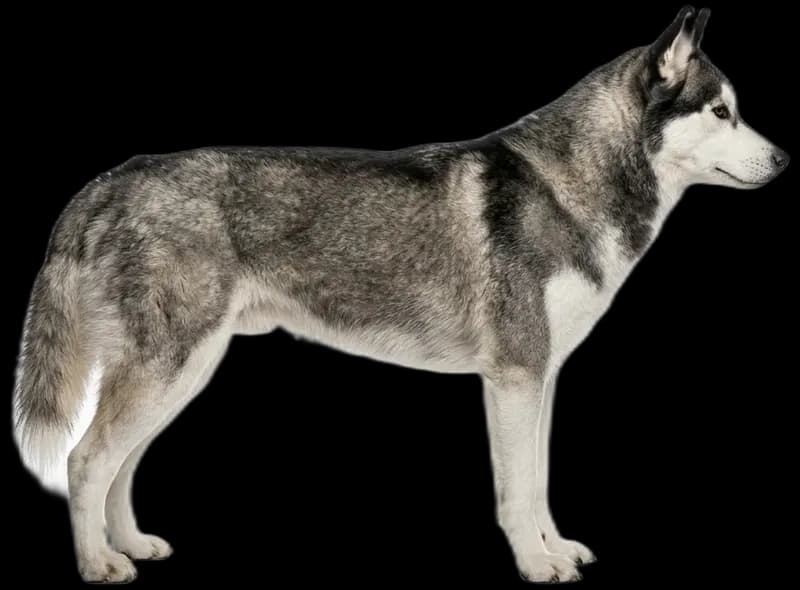
Siberian Husky

"An athletic sled dog with an irrepressible spirit of freedom and a friendly nature, shining as an enduring partner for sporty adventurers in the wild."

Your Height:
180 cm
Human
Siberian Husky
Shoulder Height: 57 cm
Age12-14 years
Average life expectancy with species-appropriate husbandry and good health.
Height
Shoulder Height: 54-60cmHead Height: ~77cm (est.)
The standard size measured from the ground to the highest point of the shoulder (withers).
Weight20-28 kg
Ideal body weight for a healthy, adult breed.
Cost/Month€65+
The sum of food, insurance, and basic care per month.

Character Profile

Activity Level
A measure of the daily urge to move and the necessary mental stimulation.

As a sled dog, he has enormous endurance and requires several hours of intense physical and mental exercise every day.

Trainability
The willingness of the breed to cooperate with humans and learn commands quickly.

Highly intelligent but also independent and willful; he often questions commands and possesses a very strong prey drive.

Family Friendliness
Describes patience and adaptability when dealing with children and family bustle.

Very friendly and affectionate towards his family; he is known for being gentle and is often very patient with children.

Sociability
Behavior towards strangers and other dogs/pets.

Extremely social pack animal that craves the company of humans and other dogs; his friendliness makes him a poor watchdog.

Beginner Friendly
Indicates how well the breed is suited for first-time owners without much experience.

The combination of high energy levels, independence, and strong prey drive is often very challenging for first-time owners.

Apartment Friendly
Considers barking behavior, space requirements, and the general need for rest indoors.

Due to his high energy and tendency to howl, he is less suited for city apartments and thrives best with plenty of space and a yard.

Grooming Effort
Time required for brushing, bathing, and nail care. Long-haired breeds often need daily care.

The coat is actually self-cleaning but requires daily brushing during the extreme shedding seasons to manage the volume of hair.

Shedding
How much loose hair the breed loses in the house. Important for allergy sufferers and cleaning effort.

Sheds year-round and 'blows' his entire undercoat twice a year, leading to extreme amounts of loose hair in the home.

Did you know?

Keeping a pet of this size costs over 80€ per month on average. Plan your finances wisely.

Character & Training

The Siberian Husky is a spirited individual with a mind of its own. Highly intelligent yet fiercely independent, they often view commands as suggestions rather than rules. Training requires immense patience, creativity, and a focus on positive reinforcement to keep their wandering minds engaged. They are notoriously social and lack any aggressive guarding instincts, welcoming strangers with open paws. Their vocal nature and 'talking' habits add a unique, charismatic layer to their complex personality.

Living & Exercise

This breed is an endurance athlete that thrives on high-intensity activity. A casual walk around the block won't suffice; they crave long-distance running, hiking, or mushing to remain mentally stable. While they can adapt to urban living, it requires a significant time commitment to outdoor exercise. A secure, 'husky-proof' fence is vital, as their instinct to roam and high prey drive often leads them on unintended solo adventures. They are deeply pack-oriented and suffer when isolated.

Health & Grooming

Siberian Huskies are generally hardy, though they are prone to specific genetic issues like juvenile cataracts and hip dysplasia. Their dense double coat is remarkably 'self-cleaning' and rarely carries a typical dog odor. However, during their semi-annual shedding seasons, they 'blow' their coat, requiring daily grooming to manage the sheer volume of fur. Maintaining a lean weight is crucial to protect their joints, as their efficient metabolism allows them to sustain energy on quality food.

History

Developed by the Chukchi people of Northeast Asia, these dogs were bred to pull light loads over vast, frozen distances. Their survival depended on their ability to work in sub-zero temperatures alongside their human families. Their heroic legacy was cemented in 1925 during the Great Race of Mercy to Nome, where sled teams delivered life-saving medicine. This rich heritage of endurance and companionship remains visible in every stride of the modern Husky.

Siberian Husky | Dog Breeds