Back to overview
MediumScotland

Scottish Fold

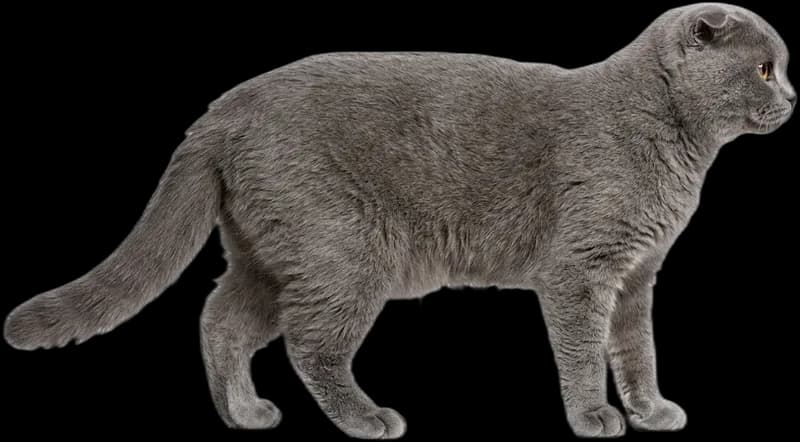
"The Scottish Fold enchants with her distinctive folded ears and gentle, teddy-bear-like appearance. She is a warm, balanced companion who loves her family and fits perfectly into a quiet home. With her peaceful character, she is the ideal, charming housemate for people who enjoy spending plenty of time with their pet."

Your Height:
180 cm
Human
Scottish Fold
Shoulder Height: 28 cm
Age12-15 years
Average life expectancy with species-appropriate husbandry and good health.
Body Length
35-55cmBack Height: 25-30cm
Body length from nose to base of the tail.
Weight4-6 kg
Ideal body weight for a healthy, adult breed.
Cost/Month€60+
The sum of food, insurance, and basic care per month.

Character Profile

Activity Level
A measure of the daily urge to move and the necessary mental stimulation.

Tends to be calm and prefers moderate play over intense activity.

Affection Level
How cuddly and attached the breed is – some cats constantly seek physical contact, others are more aloof.

Very affectionate and seeks close contact with her humans.

Independence
How well the cat can cope on its own. Independent breeds need less attention.

Enjoys companionship and does not like being alone for long.

Family Friendliness
Describes patience and adaptability when dealing with children and family bustle.

Considered gentle and very sociable in family life.

Beginner Friendly
Indicates how well the breed is suited for first-time owners without much experience.

Due to her balanced temperament, well-suited for beginners.

Apartment Friendly
Considers space requirements, the general need for rest, and how well the cat can cope with indoor living.

Very well suited for apartment living.

Grooming Effort
Time required for brushing, bathing, and nail care. Long-haired breeds often need daily care.

Requires regular brushing and ear maintenance.

Shedding
How much loose hair the breed loses in the house. Important for allergy sufferers and cleaning effort.

Sheds a moderate amount of fur.

Vocalization
How talkative the breed is. Some cats meow frequently and loudly, while others are rather quiet.

Usually quiet and meows rarely or softly.

Did you know?

Keeping a pet of this size costs over 80€ per month on average. Plan your finances wisely.

Character & Training

This breed is known for its exceptionally gentle and sociable nature. She is very people-oriented and often follows her owners through the house like a small shadow. Despite her playfulness, she has a rather calm disposition and greatly values quiet cuddle sessions. She is generally extremely tolerant and friendly towards children and other pets. Training is usually straightforward due to her intelligence and adaptability. However, she requires a loving, patient approach, as she can react sensitively to chaos. Overall, she is a loyal and unobtrusive companion for everyday life.

Living & Exercise

The Scottish Fold is an ideal indoor cat, as she does not have an extreme need for movement. Nevertheless, she enjoys secured outdoor access or a secured balcony to get some fresh air. Indoors, she should be challenged with varied toys and climbing opportunities to keep her interest piqued. As she is very sociable, she feels most comfortable in a household with a feline companion or plenty of human attention. She adapts well to various living situations, provided she is offered enough places to retreat. A stable, calm environment promotes her well-being the most.

Health & Grooming

Health is a central issue with this breed, as the characteristic folded ears are based on a genetically determined cartilage alteration (osteochondrodysplasia). Unfortunately, this can also lead to joint problems and arthritic changes throughout the body. Therefore, regular vet visits and a diet focused on joint support are advisable. The coat should be brushed weekly to avoid matting. Special attention should be paid to cleaning the ears, as their shape makes them more susceptible to dirt buildup. When purchasing, owners should ensure they choose responsible breeders who prioritize health over aesthetic features.

History

The history of the breed began in 1961 on a farm in the Scottish region of Tayside. A white cat named Susie was discovered there, which had folded ears due to a spontaneous mutation. One of her kittens, which also exhibited these ears, was acquired by a breeder couple to begin the selective breeding of the breed. Originally called 'lop-eared', it was officially recognized as the Scottish Fold in 1966. The breed was later stabilized by crossbreeding with British Shorthairs and other domestic cats. It quickly gained worldwide popularity but remained controversial in many cat associations and countries due to health concerns regarding the gene mutation.

Scottish Fold | Cat Breeds